Turtle and Tortoise Vet Near Me: Shell, Beak, and Brumation Checks
Published 2026-11-03 by Viking Trading Group LLC
Find a vet for this
When searching for a turtle and tortoise vet near me, choose a veterinarian who regularly examines chelonians and can explain how they assess shell, mouth, husbandry, and brumation needs. Use our reptile veterinarian directory to find nearby options, then call the clinic to confirm it treats your species and can provide the care your pet needs; this guide does not replace an exam.
Key Takeaways
- Ask whether the veterinarian routinely treats your species, such as a box turtle, red eared slider, Russian tortoise, Hermann’s tortoise, Greek tortoise, or sulcata.
- Ask whether the veterinarian has ARAV membership or ABVP reptile and amphibian certification, and check the veterinarian’s license with your state veterinary board.
- A wellness exam can include weight tracking, shell and plastron assessment, mouth and beak checks, eye and ear examination, and a review of respiratory signs and husbandry.
- Fecal testing, bloodwork, and radiographs may be recommended when the animal’s history or exam points to a need for further investigation.
- Arrange a fall health and weight check before planned brumation. Sick or injured turtles and tortoises should not brumate.
- Bring a weight log, diet and lighting details, enclosure photos, temperature readings, and information about the UVB bulb and water filtration.
Related guides: Reptile Vet Near Me: What to Verify Before Booking, Bearded Dragon Vet Near Me: Exam, Fecal, and UVB Checks, and Emergency Exotic Vet: Confirm After-Hours Access Before You Need It.
How to Find a Turtle and Tortoise Veterinarian Nearby
Look for a reptile veterinarian or exotic-animal veterinarian who specifically sees chelonians, then call to confirm the clinic treats your turtle or tortoise species and the type of appointment you need.
Our reptile veterinarian directory can help you find clinics to contact.
For example, the MSPCA-Angell Avian and Exotic Medicine department in Boston lists turtles and tortoises among the reptiles it treats, along with wellness examinations and digital imaging. Its listed services also include beak and nail trims, so ask whether a specific service applies to your species and concern.
When you call, give the staff the species, age, and reason for the visit. Ask whether the veterinarian sees that species regularly, whether the clinic can perform needed diagnostics, and where it directs urgent cases outside regular hours.
Credentials and Questions to Ask Before Booking
Ask whether the veterinarian has ARAV membership or ABVP reptile and amphibian certification, then discuss their experience with your animal.
| What to verify | What it tells you | Where to check |
|---|---|---|
| ARAV membership | Ask whether the veterinarian has ARAV membership. | Association of Reptile and Amphibian Veterinarians |
| ABVP diplomate status | Ask whether the veterinarian has ABVP reptile and amphibian certification. | American Board of Veterinary Practitioners |
| State veterinary license | Whether the veterinarian is licensed in the state where the clinic practices. Ask the state veterinary board how to look up license status. | Your state veterinary board’s license lookup |
Ask practical questions about the work the clinic does, rather than only the credentials shown online:
- How often do you examine my species, and do you see animals of this age and size?
- Can you describe your approach to anesthesia for chelonians and the monitoring used during a procedure?
- Can you take and interpret radiographs for turtles or tortoises?
- Who handles a large tortoise during examination, imaging, or an emergency visit?
- Can your clinic assess shell disease, mouth or beak overgrowth, reproductive concerns, and brumation readiness?
- What should I do if my pet needs care after hours?
Use the Exotic Vets directory to identify clinics to call.
What a Chelonian Wellness Exam Covers
A wellness exam gives the veterinarian a baseline for your pet’s health and husbandry. Bring previous weights or medical records when you have them, since a weight tracked over time can be more informative than a single measurement.
- Weight and body condition: The veterinarian records weight and assesses body condition in relation to species, age, and health history.
- Shell and plastron: The veterinarian checks for injury, abnormal softness, discoloration, damaged areas, and signs that may indicate shell disease or poor husbandry.
- Mouth and beak: The veterinarian looks for uneven or excessive growth, damage, and problems that may interfere with eating. A beak trim should be performed only when the veterinarian recommends it.
- Nails and limbs: The exam can identify overgrowth, injury, swelling, or movement concerns.
- Eyes, ears, and breathing: The veterinarian checks the eyes and nostrils, listens for respiratory concerns, and examines the ears. In box turtles, swelling near the ear can be aural abscess and needs veterinary assessment.
- Husbandry and diet: The veterinarian reviews lighting, temperature, humidity, water quality, filtration, and food to identify conditions that may contribute to illness.
Species and individual needs differ, so bring your setup details rather than relying on a generic care list.
When Vets May Recommend Fecal Tests, Bloodwork, or Radiographs
Not every healthy turtle or tortoise needs the same tests at every visit. The veterinarian may recommend diagnostics based on the physical exam, the animal’s history, recent weight change, diet, environment, or signs of illness.
| Test or assessment | Why a veterinarian may consider it | Useful context to share |
|---|---|---|
| Fecal parasite test | To look for intestinal parasites, particularly when there are digestive signs, a new animal is being evaluated, or screening is appropriate. | Stool changes, appetite, recent treatment, and when the sample was collected. |
| Bloodwork | To investigate illness, assess organ or metabolic concerns, or support planning for a procedure when indicated. | Changes in activity, appetite, weight, hydration, or reproductive behavior. |
| Radiographs | To assess internal structures, shell or skeletal injury, possible egg retention, or other concerns that cannot be resolved by an external exam alone. | Trauma history, abnormal posture, straining, swelling, or trouble moving. |
Ask what question each test is intended to answer and how the result could change the care plan. A clinic that offers imaging or in-house laboratory testing may be able to complete some parts of the workup at the same location, but services vary by clinic.
Shell, Beak, and Other Problems Vets Commonly Assess
Shell rot, pyramiding, vitamin A deficiency, respiratory infection, egg binding, and metabolic bone disease are among the concerns a reptile veterinarian may investigate. Their causes and treatment differ, so a shell or beak change should not be treated at home without veterinary guidance.
Arrange prompt assessment for new shell discoloration, soft or damaged areas, a foul odor, bleeding, cracks, or a change in shell shape. Beak changes that interfere with eating, sudden uneven growth, or visible injury also warrant a veterinary appointment; do not file, cut, or trim the beak yourself.
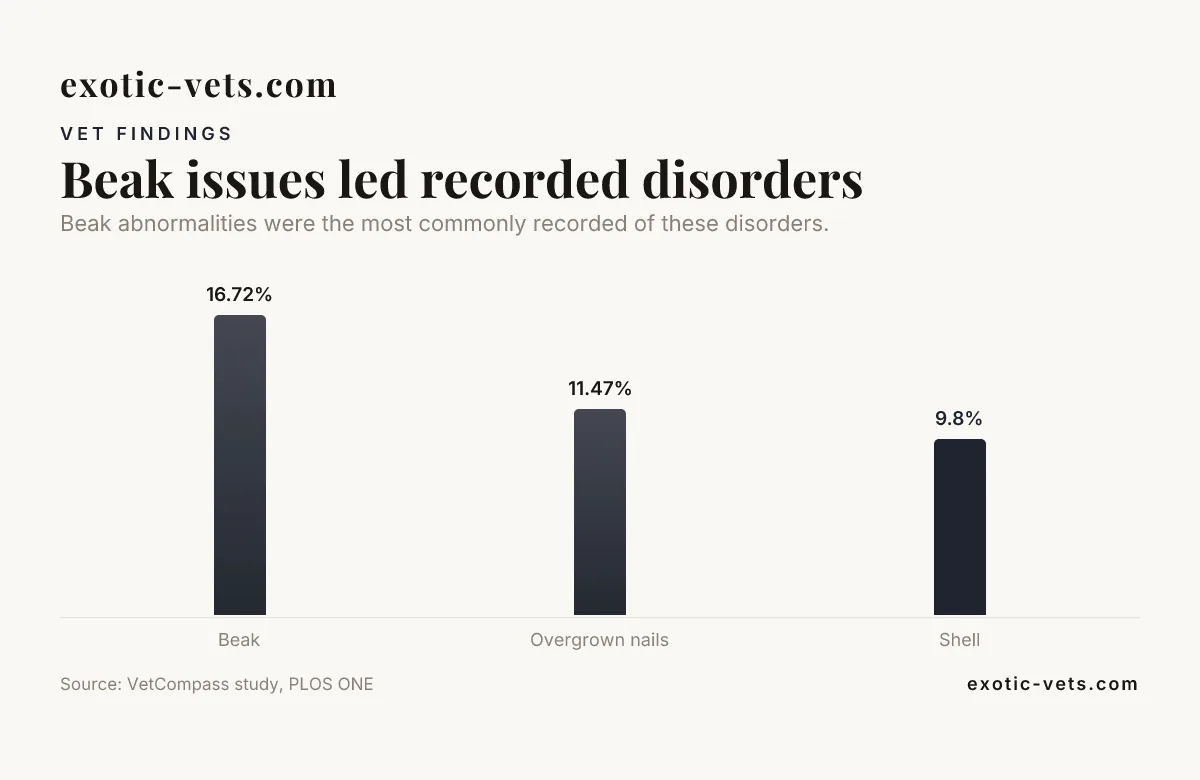
In a VetCompass review of 2,040 pet chelonians seen at UK primary care clinics in 2019, beak abnormalities (16.72%), overgrown nails (11.47%), and shell abnormalities (9.80%) were the most commonly recorded disorders.
Source: VetCompass study, PLOS ONE
Fall Brumation Checks and Individual Suitability
Brumation is a seasonal period of reduced activity in some reptiles, but it is not appropriate for every species or individual animal. Discuss it with a reptile veterinarian before cooling your pet, especially if you are unsure whether its species, age, health, or captive routine makes brumation suitable.
A fall pre-brumation check lets the veterinarian review health, body condition, weight history, and husbandry before the animal enters a period of reduced activity. Texas A&M College of Veterinary Medicine & Biomedical Sciences advises that sick or injured turtles and tortoises should not brumate.
For a planned check, bring a recent weight log and describe your animal’s appetite, activity, enclosure conditions, lighting, and temperatures. Ask the veterinarian for a species-specific plan, including whether brumation is appropriate, how to prepare, what signs require intervention, and how to monitor the animal afterward.
Reduced activity as the weather changes can reflect temperature or lighting changes, while illness can look similar without an examination.
What to Bring to the First Appointment
Husbandry details help the vet narrow down a problem. A few clear records can help the veterinarian understand how your turtle or tortoise lives and what has changed.
- Recent weights and dates, plus any earlier medical records.
- Photos of the full enclosure, basking area, water area, and lighting setup.
- Basking and water temperature readings, along with humidity information where relevant.
- UVB bulb type and age, and details about the fixture and distance from the basking area.
- Water filtration and maintenance details for aquatic turtles.
- A written diet list, including supplements and how often each food is offered.
- A fresh fecal sample if the clinic requests one. Call ahead to ask how to collect and store it.
- A list of symptoms, when they began, and any changes in appetite, activity, stool, or behavior.
Transport your pet in a secure, ventilated container that prevents escape and limits jostling. Keep the animal protected from temperature extremes, and ask the clinic for handling advice before moving a very large tortoise.
Checklist for Calling and Preparing
- Species: Tell the clinic whether you have a box turtle, red eared slider, another aquatic turtle, or a tortoise such as a Russian, Hermann’s, Greek, or sulcata.
- Experience: Ask how often the veterinarian treats that species and whether the clinic handles animals of your pet’s size.
- Credentials: Ask about ARAV membership, ABVP board certification, and the veterinarian’s state license.
- Capabilities: Ask about fecal testing, bloodwork, radiographs, anesthesia, and the clinic’s urgent or after-hours arrangements.
- Visit records: Gather weight history, diet, enclosure photos, lighting details, and temperature readings.
- Brumation: If you are considering seasonal cooling, book a health and weight check before starting.
If a clinic is closed, ask its recorded message or staff where to seek after-hours care.
Warning Signs That Need Same Day Care
Call a veterinarian for a same day visit if your turtle or tortoise has labored or open-mouth breathing, repeated bubbles or discharge from the nose, active bleeding, a serious shell injury, sudden inability to move normally, or severe weakness. Straining, a prolapse, or a rapidly worsening swelling also needs prompt veterinary attention.
Do not wait for a routine wellness appointment when breathing is difficult or an injury is severe. If the clinic cannot see your animal, contact an emergency service and explain the species, size, symptoms, and how quickly they started.
Our telehealth and insurance information can help you understand remote guidance and coverage options. A telehealth visit is not a substitute for an in person exam when your pet needs hands on care or diagnostics.
Costs and Routine Checkups
The cost of a turtle or tortoise vet visit depends on the appointment and the diagnostics or treatment recommended. Ask the clinic for an estimate that separates the exam from possible fecal testing, bloodwork, radiographs, or procedures; fees vary.
For a healthy pet, ask the veterinarian to set a checkup schedule based on species, age, medical history, and husbandry. Regular preventive visits can establish a weight and health baseline before a problem becomes urgent.
Summary
When looking for a turtle or tortoise vet, start by verifying species-specific experience, clinic capabilities, and a veterinarian’s credentials. Bring husbandry details and weight records, arrange a fall assessment before planned brumation, and seek same day care for serious warning signs.
Exotic Vets is a directory, not a veterinary practice. Use it to find clinics, then contact them directly to confirm services. This guide does not replace an exam.
Frequently Asked Questions
How much does it cost to take a turtle or tortoise to the vet?
There is no single standard fee. Call the clinic with your species and reason for the visit to ask for its current exam fee.
Should I fast my turtle before a vet appointment?
Do not change feeding before a visit unless the clinic gives you instructions for a planned procedure or test. Fasting guidance can depend on the species and the reason for the appointment.
Can an online veterinarian diagnose shell rot or an overgrown beak?
A remote veterinarian may help discuss symptoms and next steps, but confirming a shell or mouth problem may require hands on examination and diagnostics. Use remote advice for triage, not as a replacement for an in person visit when your pet needs examination or treatment.
What if I cannot get a brumation appointment before the weather cools?
Ask the clinic about a cancellation appointment or a referral to a veterinarian who treats chelonians.
Should I book a new vet if my turtle looks healthy?
Yes. Booking while your pet appears well gives you time to find a clinic that treats its species before a concern arises.
Would insurance have paid for this visit?
Our free calculator compares published exotic pet insurance premiums with real exotic vet fees for rabbits, ferrets, guinea pigs, birds, reptiles, and more.
Try the exotic pet insurance cost estimatorDownload the printable PDF: Turtle and Tortoise Vet Visit and Brumation Checklist
This guide is general information for pet owners and does not replace an exam by a veterinarian. If your pet is in distress, call a vet now. See our Editorial Policy.