Bearded Dragon Vet Near Me: Exam, Fecal, and UVB Checks
Published 2026-11-02 by Viking Trading Group LLC
Find a vet for this
Choose a reptile veterinarian who can explain their experience with bearded dragons and assess your pet, its fecal test needs, and its habitat. When looking for a bearded dragon vet near you, ask who will perform the exam and how the clinic handles urgent reptile cases.
Key Takeaways
- Use the Association of Reptile and Amphibian Veterinarians (ARAV) directory as a starting point, then ask whether the veterinarian regularly treats bearded dragons.
- ARAV membership and ABVP board certification are different credentials. Ask specifically about certification in Reptile and Amphibian Practice.
- A bearded dragon wellness exam can include weight, body condition, mouth and jaw, skin, shedding, limbs, hydration, activity, and a husbandry review.
- Fecal ova and parasite testing can identify parasite stages in a stool sample. A normal looking stool does not rule out parasites.
- Bring UVB bulb and fixture details, installation distance, bulb age, temperature readings, diet and supplement history, and enclosure photos.
- Breathing difficulty, seizures, collapse, major injury, or prolapse need immediate emergency contact. Marked lethargy, worsening weakness, or other illness signs need prompt veterinary advice.
Related guides: Reptile Vet Near Me: What to Verify Before Booking, Exotic Pet Not Eating: When Waiting Becomes Risky, and Emergency Exotic Vet: Confirm After-Hours Access Before You Need It.
How to verify a veterinarian treats bearded dragons
A reptile veterinarian or exotic animal veterinarian is the right type of clinician to contact, but a general exotic pet listing does not tell you how often that veterinarian sees bearded dragons. Start with the reptile listings in our U.S. Directory and look for clinics in your city or nearby communities. Call to confirm that the clinician who will examine your dragon regularly treats bearded dragons and can see new patients.
The ARAV member directory is a useful starting point, but membership alone does not show case volume. Ask how often the named veterinarian treats bearded dragons, whether they can perform reptile fecal testing, and which diagnostics are available if the exam points to a need for them.
Ask whether the veterinarian is an ABVP diplomate in Reptile and Amphibian Practice. This is a specialist board certification, distinct from ARAV membership. Few clinics have one, and many experienced reptile vets do not.
Before booking, ask how the clinic handles urgent reptile cases and what its current after hours referral or callback process is. Our emergency care listings can help you look for options, but call the clinic to check its current arrangements.
- Which veterinarian will examine my bearded dragon?
- How often does that veterinarian treat bearded dragons?
- Does the clinic offer fecal ova and parasite testing, bloodwork, or radiographs if indicated?
- What should I do if my dragon becomes ill after hours?
Exotic Vets is a directory, not a veterinary practice. Use it to find clinics, then contact them directly to confirm services.
What happens during a wellness examination
A bearded dragon wellness exam usually begins with a hands on physical examination and a review of the animal’s history and husbandry. The veterinarian may check weight and body condition, mouth and jaw, skin and shedding, limbs, hydration, and general activity to look for changes that can be difficult to spot at home.
| Exam component | What the veterinarian assesses | Why it matters |
|---|---|---|
| Weight and body condition | Current weight, body shape, and changes from prior records | Trends can help identify changes in nutrition, health, or growth. |
| Mouth and jaw | The mouth, jaw alignment, and visible tissues | These findings help the veterinarian assess oral and jaw health. |
| Skin and shedding | Skin condition, retained shed, and visible changes | Skin and shedding findings help guide the physical assessment and husbandry review. |
| Husbandry history | Lighting, temperatures, diet, supplements, and enclosure setup | These details give context to physical findings and help guide care recommendations. |
The listing for wellness examinations, parasite testing, and nutritional counseling at The Odd Pet Vet describes wellness examinations, parasite screening, and nutritional counseling as preventive and husbandry services. These services illustrate how a preventive visit can include both a physical assessment and discussion of care at home.
Bloodwork or radiographs are not automatic parts of every wellness appointment. A veterinarian may recommend reptile bloodwork or imaging when the history, physical examination, or suspected condition makes those tests useful.
A routine wellness exam supports preventive care, but it does not take the place of investigating a new symptom. If your dragon has a specific health change, tell the clinic when you book so the team can advise you about timing.
Fecal testing and other diagnostic checks
A stool sample can be checked for parasite stages through fecal ova and parasite testing, helping the veterinarian choose an appropriate next step. A stool that looks normal does not establish that parasites are absent, so testing may still be appropriate based on the dragon’s history and exam.
Collect a fresh sample in a clean, sealed container. If you cannot take it to the clinic promptly, refrigerate it rather than freezing it, and follow the clinic’s instructions about timing and storage.
If your dragon does not produce a sample before the appointment, keep the appointment and ask the clinic how to provide one later. Do not delay a visit for an ill dragon while waiting for a bowel movement.
Parasite testing is one example of a preventive diagnostic service. A veterinarian may also consider bloodwork or imaging if symptoms or examination findings raise concern about metabolic disease, an internal problem, or impaction; the tests depend on the individual case.
Make the UVB and husbandry review specific
Bring the UVB bulb and fixture details, including the bulb type, model, age, and replacement history. Also note how far the bulb sits from the basking area and whether mesh, glass, or another barrier is between the lamp and your dragon.
Ask whether an in person UVB measurement would help assess the light reaching the basking position. A lamp can look bright to you while providing different UVB output at the animal’s location, so the fixture, distance, and barriers matter.
The University of California, Davis, School of Veterinary Medicine guidance says the referenced UVB bulb should be replaced every 3 to 6 months, even if it still emits visible light. This is guidance for the bulb discussed in that care resource, not a universal replacement schedule for every bulb.
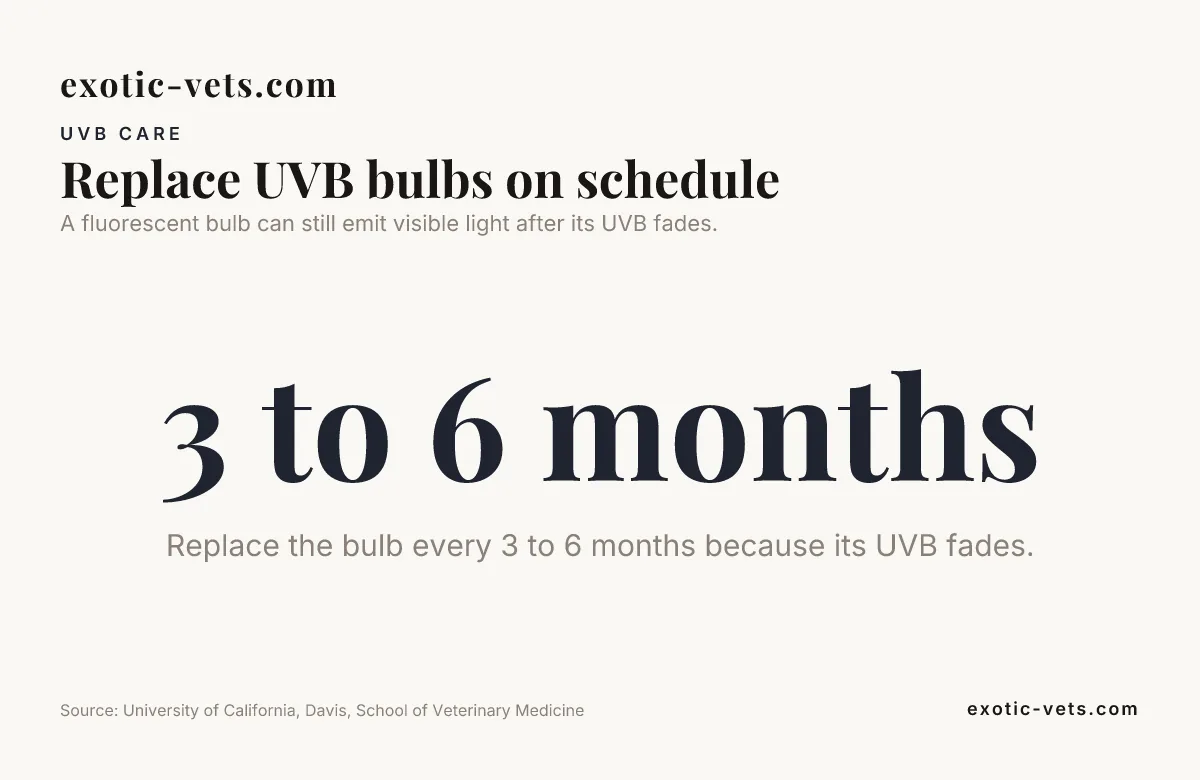
A fluorescent bulb can still emit visible light after its UVB fades.
Source: University of California, Davis, School of Veterinary Medicine
| Information to bring | Why it helps | Source |
|---|---|---|
| UVB bulb type and fixture details, including whether it is a T5 HO UVB setup | The veterinarian can interpret the light source and fixture in use. | |
| Distance from the basking area and any mesh or other barrier | Position and barriers help explain the UVB reaching the basking area. | |
| Bulb age and replacement history | UC Davis recommends replacing the referenced UVB bulb every 3 to 6 months because UVB fades while visible light remains. | UC Davis School of Veterinary Medicine |
| Basking and cool side temperature readings | Measurements from both areas help the veterinarian review the enclosure’s thermal conditions. | |
| Diet and supplement details | Food and supplement history gives context to body condition and health findings. | |
| Photos of the enclosure | Images help the veterinarian understand layout and lamp placement during a husbandry review. |
Take temperature readings from both the basking area and cool side, and note how and when you measured them. Photos that show the whole enclosure and close views of the lamp, fixture, and basking area can make the discussion more specific.
Common problems and preventive follow-up
Veterinarians may investigate metabolic bone disease, parasites, impaction, adenovirus, and yellow fungus in bearded dragons. Their signs can overlap, so an owner cannot reliably identify the cause at home; diagnosis requires veterinary assessment.
Weight trends, diet and supplement history, temperatures, UVB setup, and physical findings help the veterinarian decide whether testing or husbandry changes are appropriate. A parasite screen can help assess parasite concerns, but it does not diagnose or treat every condition.
Follow up timing should reflect your dragon’s age, health, history, and the veterinarian’s findings. Ask the veterinarian to set a schedule for your pet rather than relying on one interval for every bearded dragon.
When establishing care, ask whether to bring a fecal sample to the first wellness visit. After that, the veterinarian can recommend repeat screening based on your dragon’s history, previous results, and exposure to other reptiles. Do not wait for a routine screen if your dragon develops signs of illness.
First visit and urgent care checklist
For a useful first visit, bring the details that let the veterinarian compare your dragon’s health with its home environment. Pack:
- Recent weights, if available
- Diet, supplement, and medication history
- Basking and cool side temperature readings
- UVB bulb and fixture information, including bulb age
- Photos of the enclosure
- A fresh fecal sample if the clinic requested one
Transport your dragon in a secure, ventilated carrier with safe, stable warmth. Avoid loose heat sources that can burn the animal, and call the clinic for advice if travel conditions or your dragon’s condition make transport difficult.
Contact a veterinarian the same day for marked lethargy, refusal to eat along with other illness signs, straining or a swollen abdomen, worsening weakness, or abnormal discharge. A clinic must assess concerning symptoms.
Breathing difficulty, seizures, collapse, major injury, or prolapse warrant immediate emergency contact. Call before traveling so the clinic can tell you where to go and how it is currently accepting reptile emergencies.
Our overview of telehealth and insurance options may help you understand remote support, but a telehealth visit cannot replace an in person exam when your bearded dragon needs hands on care or diagnostics.
Summary
Your search for a bearded dragon vet should start with a clinician who can explain their reptile experience, examine your dragon, and review its husbandry in detail. Bring the relevant records and enclosure information, ask how urgent cases are handled, and remember that this guide does not replace an exam.
Frequently Asked Questions
How much does a bearded dragon vet visit and fecal test cost?
There is no single dependable price range without knowing your location, clinic, and what the visit includes. Ask for an itemized estimate that separates the exam, fecal testing, and any recommended diagnostics, and confirm what the exam fee covers before booking.
Should I withhold food before a bearded dragon vet visit?
Do not fast your dragon unless the veterinarian specifically instructs you to. Ask the clinic about feeding if a procedure or test is planned.
Can one fecal test miss parasites?
Yes, parasite stages may not appear in every sample, and some parasites shed intermittently. Your veterinarian may recommend another sample when signs or history keep concern high.
How often should a healthy bearded dragon have a wellness exam?
Ask the veterinarian to set a schedule based on your dragon’s age, health history, and husbandry. A recently adopted dragon or one with a prior health problem may need a different plan from a healthy adult with an established care history.
Would insurance have paid for this visit?
Our free calculator compares published exotic pet insurance premiums with real exotic vet fees for rabbits, ferrets, guinea pigs, birds, reptiles, and more.
Try the exotic pet insurance cost estimatorDownload the printable PDF: Bearded Dragon Vet Visit and Husbandry Checklist
This guide is general information for pet owners and does not replace an exam by a veterinarian. If your pet is in distress, call a vet now. See our Editorial Policy.