Exotic Pet Not Eating: When Waiting Becomes Risky
Published 2026-10-29 by Viking Trading Group LLC
Free printable checklist (PDF)
Species-by-Species Appetite Loss & GI Stasis Red-Flag Chart
Download the PDFFind a vet for this
When an exotic pet is not eating, deciding whether to wait can be difficult. This guide explains which changes need prompt veterinary advice and what to observe while arranging care.
Key Takeaways
- There is no safe fasting timeline that applies to every exotic species. A missed meal matters differently for a rabbit, parrot, snake, or bearded dragon.
- Food refusal paired with low energy, weight loss, abnormal posture, fewer droppings, breathing changes, or weakness needs prompt attention.
- Rabbits and other small herbivorous mammals can develop serious digestive problems when they stop eating. Do not wait for obvious weight loss.
- Check food, water, temperature, lighting, and recent changes, but do not let a husbandry adjustment delay veterinary care if your pet is declining.
- Record your pet’s normal weight, appetite, activity, and fecal output so subtle changes are easier to spot.
- Call ahead to confirm an emergency clinic treats your species. Our emergency exotic care directory can help you find a clinic to contact.
When appetite loss becomes urgent
A single uneaten meal can have several explanations, but a clear change from your pet’s normal pattern deserves attention. Contact an exotic-animal veterinarian promptly if food refusal comes with reduced fecal output, unusual hiding, weakness, a hunched or fluffed posture, trouble breathing, vomiting or regurgitation, or a noticeable change in weight.
Some animals mask illness until they are quite sick. For rabbits and guinea pigs, reduced eating paired with fewer or absent droppings is especially concerning because digestive slowdown can worsen quickly. A small, young, elderly, chronically ill, or already underweight animal also has less reserve, so seek advice sooner rather than applying a general fasting rule.
Emergency guidance in our directory flags a rabbit refusing food for 8 or more hours as a reason for concern. It identifies 12 or more hours of complete appetite loss with no droppings in a rabbit or guinea pig as requiring immediate veterinary care. These are warning points, not a reason to wait if your pet is worsening.
Species-specific fasting and appetite changes
Species-specific fasting matters. A snake may refuse prey around shedding or during a seasonal change, while a rabbit that stops eating can face a digestive emergency. Even when a food refusal seems typical for the species, consider the animal’s age, health, weight trend, environment, and other symptoms before deciding to watch and wait.
| Pet type | What makes food refusal concerning | What to do |
|---|---|---|
| Rabbits, guinea pigs, chinchillas | Less fecal output, small or misshapen droppings, a hunched posture, tooth grinding, or low energy. In rabbits, 8 or more hours refusing food is a red flag; 12 or more hours without food and droppings is an emergency warning. | Call an exotic-animal veterinarian promptly. Do not wait for visible weight loss. |
| Birds | Fluffed feathers, sitting low or on the cage floor, weakness, altered droppings, or breathing changes alongside appetite loss. | Seek prompt advice, especially if your bird is quiet, weak, or struggling to perch. |
| Snakes | Prey refusal with weight loss, poor body condition, mouth changes, abnormal breathing, regurgitation, or a recent husbandry problem. | Review the pattern and enclosure conditions, then contact a reptile veterinarian instead of repeatedly offering prey. |
| Lizards and tortoises | Food refusal with lethargy, weakness, abnormal stool, weight loss, or temperatures outside the animal’s required range. | Check measured enclosure temperatures and arrange veterinary advice if the change persists or other signs appear. |
| Ferrets, hamsters, rats, and other small mammals | Reduced activity, drooling, difficulty chewing, vomiting, diarrhea, or a change in droppings or urination. | Contact a veterinarian familiar with the species, especially when appetite loss is paired with weakness or digestive signs. |
Seasonal appetite change can occur in some reptiles, and snakes may have a predictable prey-refusal pattern. A seasonal explanation is more plausible when body condition, behavior, hydration, and husbandry remain stable, but it does not rule out hidden illness.
Rabbits and other small mammals are also vulnerable to dental disease and gastrointestinal stasis. For veterinary-reviewed information on rabbit health, consult the Merck Veterinary Manual.
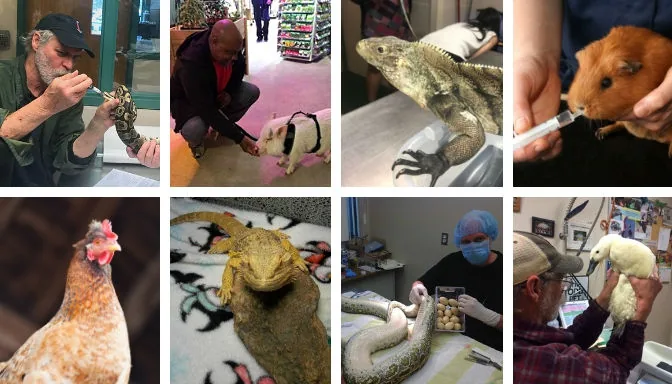
These images show some of the species owners may need to monitor and the handling involved in veterinary care.
Medical causes and husbandry checks
Appetite loss can come from dental disease, pain, infection, parasites, digestive obstruction, reproductive problems, or other illness. Stress, a new enclosure mate, travel, noise, a change in food, or an incorrect temperature gradient can also affect eating, but these explanations should not be assumed without considering health concerns.
Check the basics while you arrange veterinary advice: confirm the food is fresh and familiar, make sure water is available, and measure the enclosure’s temperature rather than relying on touch. For reptiles, review the species-appropriate basking and cool areas, lighting, humidity, and recent equipment changes.
Keep the environment calm and offer the pet its usual safe food in its regular feeding area. Avoid repeated handling, repeated feeding attempts, sudden diet changes, or force-feeding unless a veterinarian has directed you to do so. Correcting a suspected husbandry problem is sensible, but it does not replace an exam when your pet is declining.
What to record before calling the veterinarian
A short, clear record helps the clinic judge urgency and prepare for the visit. Note when your pet last ate normally, which foods it accepted or refused, changes in fecal output, water intake, activity, posture, and any recent changes to the enclosure or routine.
Track weight on the same scale and under similar conditions so you can compare the trend over time. Small changes can be hard to see by eye, especially in birds and small mammals, and waiting until an animal looks thin can mean the problem has already progressed.
Checklist: What to check and share
- Food: Record the last normal meal, what was offered, and what remains uneaten.
- Weight: Share recent measurements and the dates you took them.
- Droppings: Note whether they are fewer, smaller, unusually wet, discolored, or absent.
- Behavior: Describe activity, posture, hiding, perching, chewing, and response to handling.
- Husbandry: Write down measured temperatures, lighting changes, humidity if relevant, and any new food, cage mate, or enclosure change.
- Other signs: Mention discharge, drooling, breathing changes, vomiting or regurgitation, or signs of pain.
Bring the record and any medications your pet takes to the appointment. If you can safely take a short video of an unusual behavior, it may help the veterinarian assess a sign that is not present during the exam.
What an exotic-animal veterinarian may assess
The veterinarian may ask about diet, weight, fecal output, enclosure conditions, and the timing of the appetite change, then examine your pet’s mouth, body condition, hydration, abdomen, and breathing. Depending on the species and findings, testing may include bloodwork, fecal testing, radiographs, or other diagnostic imaging.
A veterinarian can also assess whether dental disease, gastrointestinal stasis, pain, infection, or a husbandry problem is contributing to food refusal. The right tests depend on the animal and its signs, so an online conversation cannot replace hands-on care or diagnostics when they are needed.
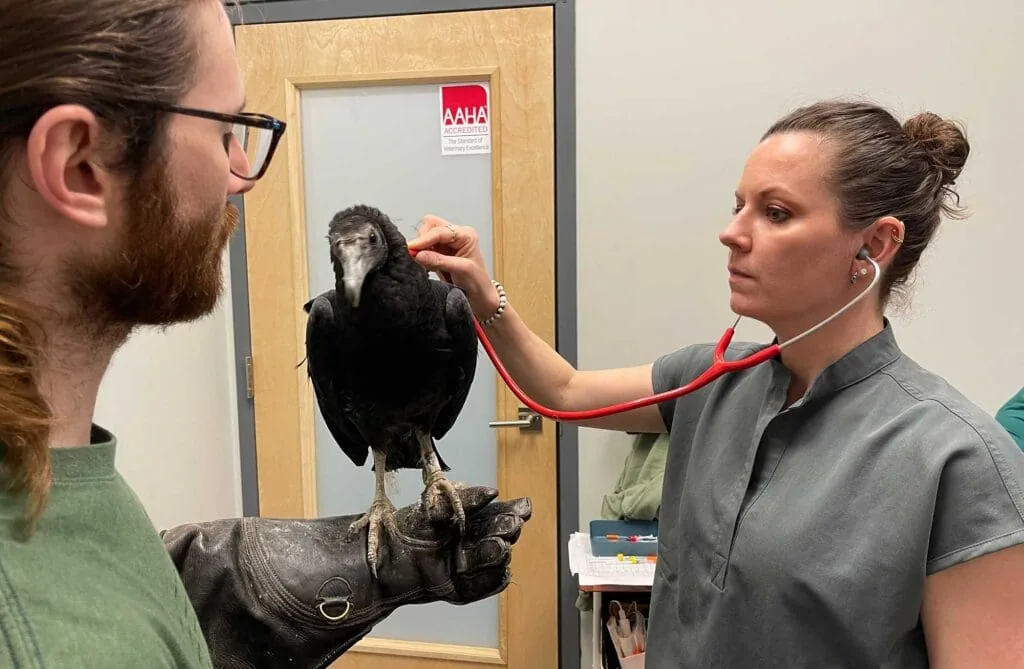
This image shows a bird being examined, one example of the species-specific handling and assessment a veterinary visit may involve.
For bird care, the Association of Avian Veterinarians provides a professional resource for avian medicine. Reptile and amphibian owners can consult the Association of Reptile and Amphibian Veterinarians, while the Association of Exotic Mammal Veterinarians focuses on exotic mammals.
When board certification matters, use the ABVP diplomate directory. Membership is not the same as board certification, and we label the two separately.
Finding urgent care and understanding costs
Call before driving to an emergency exotic animal hospital. Ask whether a clinician experienced with your pet’s species is available, whether the clinic can see your animal now, and what you should bring. If your usual clinic is closed, our exotic pet veterinarian directory helps owners look for specialized veterinary care across the United States.
Our directory is published by Viking Trading Group LLC, an independent publisher based in East Longmeadow, Massachusetts. Listings are built from public records and clinic information, and clinics can request corrections. If you need help deciding where to call, our reptile veterinarian listings cover reptile-focused care, while a telehealth and insurance overview explains options for remote advice and coverage.
Typical U.S. Planning estimates vary by clinic and region. The ranges below are aggregated estimates, not a clinic quote; after-hours care, diagnostics, and hospitalization can change the total.
| Type of care | Typical U.S. Estimate | What can affect the total |
|---|---|---|
| Exotic pet consultation | $75 to $145 | Clinic, region, and appointment type |
| Diagnostic bloodwork, fecal screening, or imaging | $95 to $340 | Which tests the veterinarian recommends |
| Emergency exotic exam or triage | $175 to $295 | After-hours timing and facility |
| Twenty-four-hour exotic ICU hospitalization and oxygen | $450 to $1,200 or more | Level of care and length of hospitalization |
Call the clinic directly for current fees and availability. A telehealth visit can help with initial triage, but a telehealth visit is not a substitute for an in person exam when your pet needs hands on care or diagnostics.
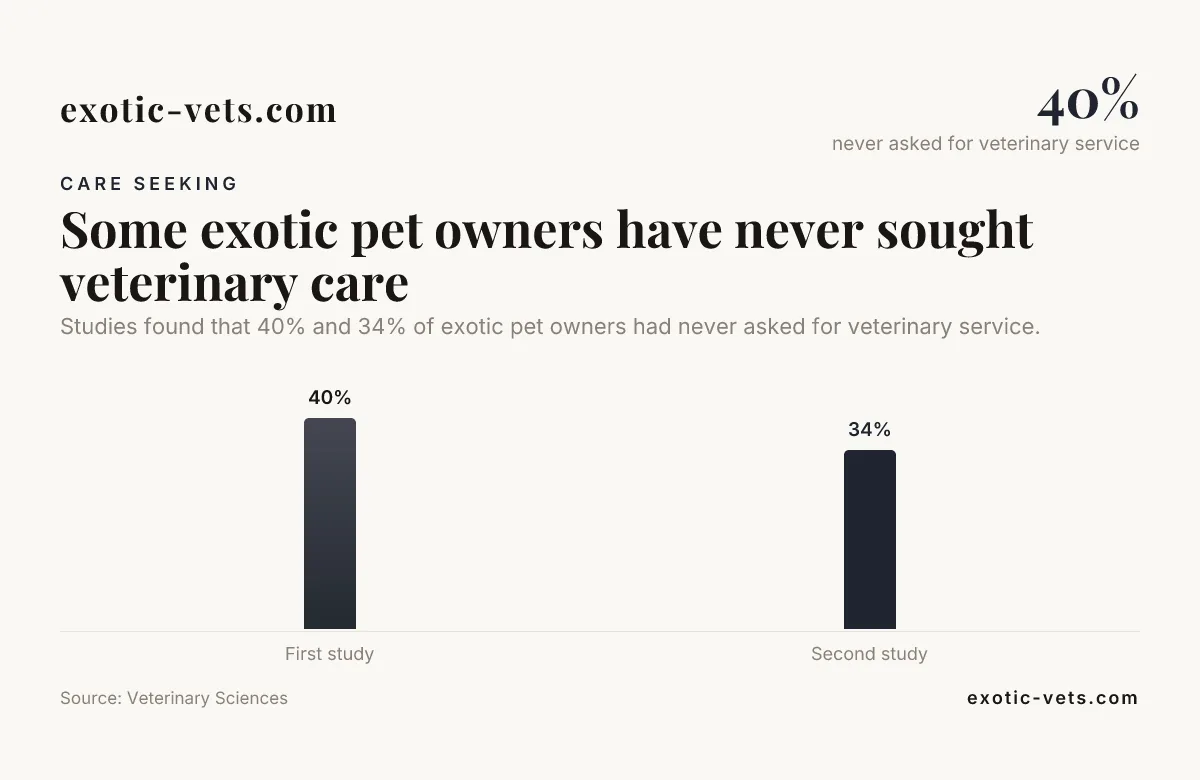
Studies found that 40% and 34% of exotic pet owners had never asked for veterinary service.
Source: Veterinary Sciences
Summary
Exotic Pet Not Eating depends on the species, the animal’s normal pattern, and the signs that accompany food refusal. Check husbandry, record changes, and contact an exotic-animal veterinarian promptly when appetite loss comes with reduced droppings, weakness, weight change, or other signs of illness.
Husbandry details often explain a problem faster than any test, but they never replace an exam. None of these guides replace an exam.
Frequently Asked Questions
Can my exotic pet still be sick if it is drinking water?
Yes. Drinking does not rule out dental disease, pain, infection, or digestive trouble, and it does not make persistent food refusal safe to ignore. Tell the veterinarian whether drinking and urination have changed too.
Should I bring a stool sample to the appointment?
Ask the clinic when you call, since sample handling and testing depend on the animal and suspected problem. If the clinic requests one, collect it in a clean container and keep it separate from bedding or food.
What if my pet lives with another animal and I cannot tell who ate?
Use a safe, brief feeding arrangement that lets you observe your pet’s intake without causing social stress. Tell the clinic that the amount eaten is uncertain, and do not delay care if your pet also seems unwell.
Can a video call tell me why my pet stopped eating?
A remote veterinarian may help assess urgency and advise you where to seek care, but many causes require a physical examination or diagnostic testing. If your pet is weak, breathing abnormally, or rapidly worsening, contact an emergency clinic directly.
Should I change my pet’s diet before the appointment?
Keep a familiar, species-appropriate food available and record what your pet accepts. Avoid introducing unfamiliar foods or supplements as treatment unless a veterinarian recommends them for your pet.
Would insurance have paid for this visit?
Our free calculator compares published exotic pet insurance premiums with real exotic vet fees for rabbits, ferrets, guinea pigs, birds, reptiles, and more.
Try the exotic pet insurance cost estimatorDownload the printable PDF: Species-by-Species Appetite Loss & GI Stasis Red-Flag Chart
This guide is general information for pet owners and does not replace an exam by a veterinarian. If your pet is in distress, call a vet now. See our Editorial Policy.