Emergency Exotic Vet: Confirm After-Hours Access Before You Need It
Published 2026-10-29 by Viking Trading Group LLC
Find a vet for this
To find an emergency exotic vet, confirm after-hours access before you need it: call the hospital and ask whether it accepts your exact species, has an exotics-trained veterinarian available now, and can take the case. A hospital that is open all night may not have a clinician able to examine your bird, reptile, rabbit, or other small mammal.
Key Takeaways
- Call before travelling and confirm your pet’s exact species, clinician availability, and whether the hospital can accept the case now.
- Open 24 hours does not necessarily mean exotic animal care is available 24 hours.
- Ask where to go if the hospital cannot examine your pet or provide the care needed.
- Keep a second exotic-capable hospital’s phone number and after-hours instructions with your pet’s records.
- Prepare a secure carrier, relevant medications, and recent health information before an emergency happens.
- Typical U.S. Emergency costs vary by region and hospital. Ask for current fees and an estimate directly.
What Counts as an Exotic Pet Emergency?
An exotic pet emergency is a sudden injury, illness, or change in behavior that could threaten your pet’s breathing, circulation, ability to move, or survival. Difficulty breathing, collapse, severe bleeding, seizures, serious trauma, or sudden weakness need urgent veterinary attention.
Signs can be subtle. A bird sitting low and unusually quiet, a rabbit refusing food or producing fewer droppings, or a reptile that becomes markedly weak may need prompt assessment, especially when the change is sudden or worsening.
If you are unsure whether a change is urgent, call an emergency clinic and describe what you see. Do not wait for symptoms to become dramatic when your pet is deteriorating.
Why a 24-Hour Emergency Hospital May Not Treat Every Exotic Species
A 24-hour emergency hospital may have staff on site around the clock but no exotics-trained veterinarian available for your pet’s species at that hour. Some hospitals have an exotic clinician on call, some can provide initial stabilization, and others may refer the case elsewhere.
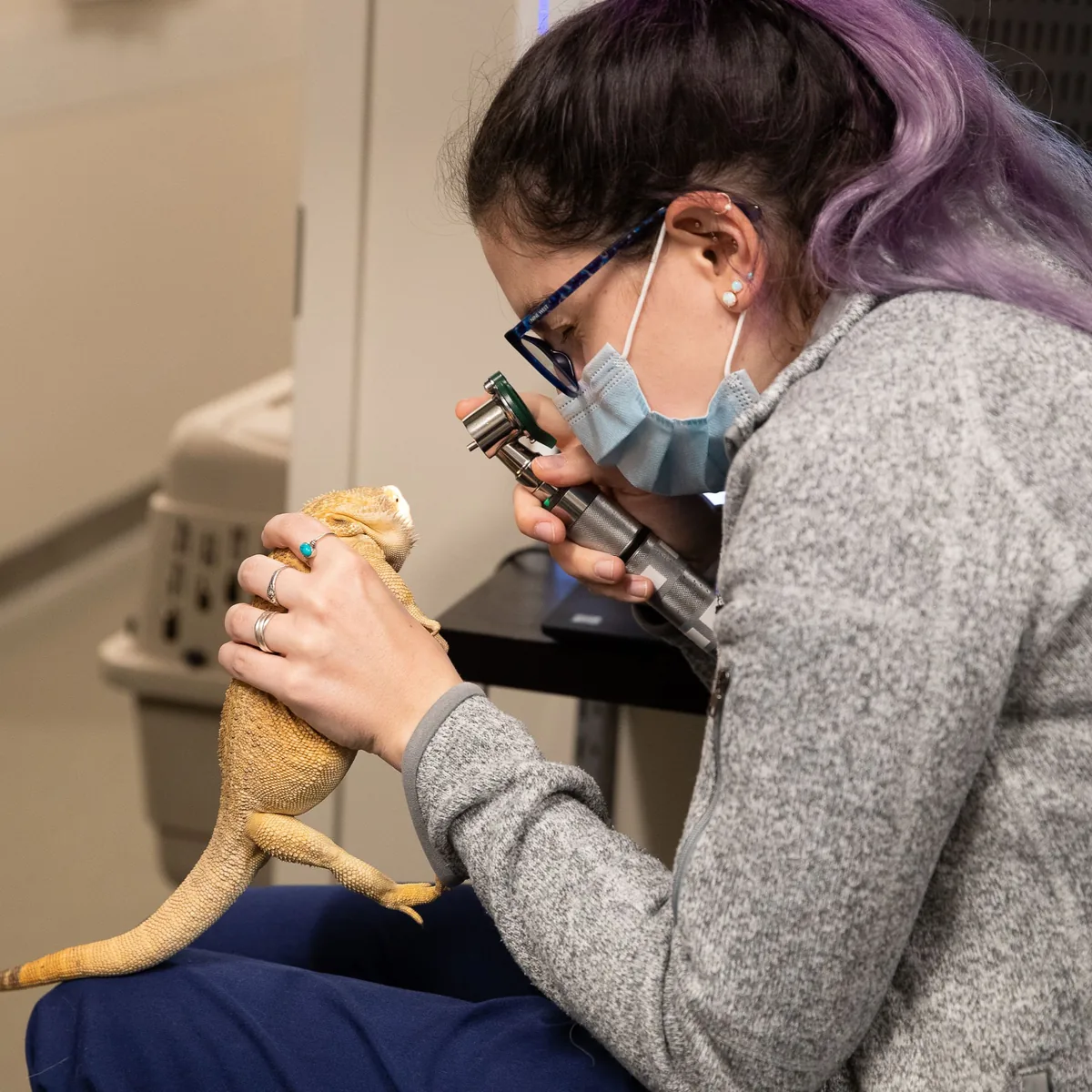
Species coverage is specific. A clinic that sees birds may not treat reptiles, and a clinic that sees rabbits may not treat every small mammal, amphibian, or wildlife species. Ask about your pet by species and, when relevant, by type, such as a parrot, bearded dragon, tortoise, or guinea pig.
Our reptile veterinary listings can help you identify clinics that list reptile care. Use any directory as a starting point, then call the hospital to confirm current after-hours access and species coverage.
Professional directories can help you identify veterinary professionals with relevant interests or credentials. Association membership and board certification are different credentials.

What to Ask When You Call an Emergency Exotic Vet
Give the clinic enough information to triage the call, then ask for clear instructions before you leave. A calm, specific call helps the staff decide whether to prepare for your arrival, direct you elsewhere, or explain the safest next step.
- Identify your pet: State the species, age if known, and any important details such as breed or size.
- Describe the problem: Explain the symptoms, when they began, whether they are worsening, and any injury or possible toxin exposure.
- Confirm availability: Ask whether an exotics-trained veterinarian is physically available or on call and whether the clinic can take your pet now.
- Check species coverage: Ask directly whether the clinic treats your pet’s species, not only exotic pets in general.
- Ask how to arrive: Confirm whether the clinic wants you to come in, where to enter, and whether it accepts walk-ins or requires an emergency appointment.
- Get a backup destination: If the clinic cannot see your pet, ask for an emergency referral and call that hospital before travelling.
- Ask about fees: Request the current triage or exam fee and ask how the clinic handles estimates for diagnostics or hospitalization.
A call does not guarantee that a particular service or clinician will be available when you arrive, so ask for the clinic’s instructions and follow them. Emergency triage may prioritize the most critical patients, which can mean a wait even after the clinic accepts your case.
Make a Backup Plan Before an Emergency
Find an exotic vet near me before a crisis by identifying a primary clinic and an alternate emergency hospital. The Exotic Vets directory lets pet owners search by location, specialty, or animal type, but a listing is not a guarantee that an exotics-trained veterinarian is present at every hour.
Exotic Vets is owned and operated by Viking Trading Group LLC, an independent publisher, not a veterinary practice, clinic-group referral service, or pet insurer.
When you compare hospitals, ask whether the exotic clinician is on site overnight, whether that person can examine your species, and whether the hospital can provide emergency diagnostics or hospitalization. The emergency-care directory can help you find potential clinics to call, but only the clinic can confirm its current access and instructions.
Write down the main number, after-hours number, address, and directions for both hospitals. Keep the information near your pet’s carrier and share it with anyone who may care for your pet.
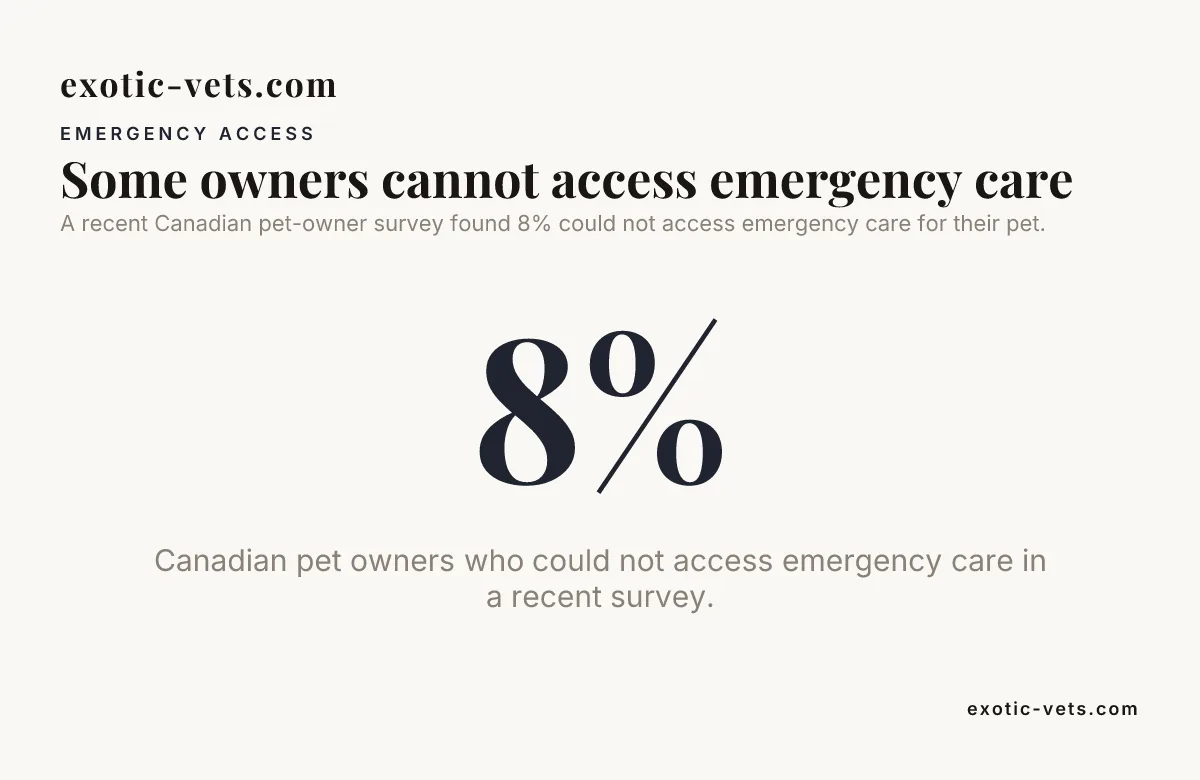
A recent Canadian pet-owner survey found 8% could not access emergency care for their pet.
After-Hours Emergency Checklist
Save this checklist with your pet’s medical records. You can use it to make a call quickly without trying to remember every detail under stress.
- Before an emergency: Record the primary clinic and alternate hospital, their after-hours numbers, and the species each treats.
- On the phone: Give the species, symptoms, start time, changes, possible toxin exposure, and your location.
- Confirm the plan: Ask whether an exotics-trained clinician is available, whether the hospital can take the case now, and where to go if not.
- Gather records: Bring recent test results, medication names and doses, known conditions, and the regular veterinarian’s contact details.
- Prepare transport: Use a secure, escape-resistant carrier with familiar, nonslip bedding. Keep the temperature appropriate for your species and avoid placing your pet directly on a heating pad or other heat source.
- Reduce stress: Keep handling and noise low, secure the carrier in the vehicle, and follow the clinic’s transport instructions.
Do not give human medication, force food or water, or try a home treatment unless a veterinarian directs you to do so. If toxin exposure is possible, keep the packaging or take a clear photo of the product and call the clinic for instructions.
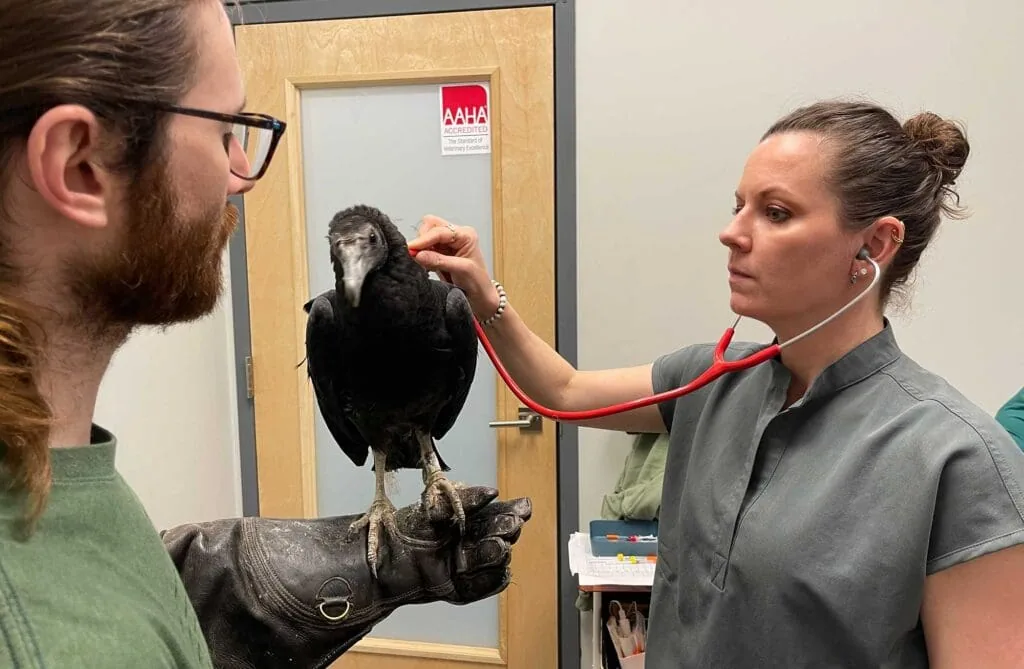
A bird being examined by a veterinarian is shown below. If your pet is having trouble breathing or is rapidly worsening, call the clinic while preparing to leave rather than delaying care to gather nonessential items.
Emergency Triage, Stabilization, and What a Hospital May Provide
Emergency triage helps the clinic assess how quickly your pet needs attention and what care may be needed first. Depending on the hospital, available staff, and your pet’s condition, care may include oxygen support, diagnostic testing, imaging, medication, surgery, stabilization, or hospitalization.
Not every emergency clinic offers every service for every species. If the first hospital cannot provide ongoing exotic care, ask whether it can assess or stabilize your pet and coordinate an emergency referral to a hospital that can continue treatment.
Online veterinary advice can help you discuss urgency or plan your next call, but it cannot provide hands-on examination, imaging, oxygen, or surgery. Our telehealth and insurance guide explains the difference between an online consultation and in-person emergency care.
Typical U.S. Emergency Exotic Vet Costs
Emergency fees vary by region, hospital, time of arrival, species, tests, treatment, and length of hospitalization. Call the clinic for its current fees and an estimate.
Emergency exotic exam fees posted by clinics and teaching hospitals range widely. Our exotic pet insurance cost estimator lists published emergency fees and shows what an insured visit would cost you.
| Emergency service | Estimated cost |
|---|---|
| After-hours emergency exotic triage exam | $165 to $295 |
| Complete exotic blood panel and biochemistry | $120 |
| Two-view digital radiographs or X-rays | $180 to $350 |
| 24-hour exotic ICU hospitalization and oxygen | $450 |
Ask what the initial fee covers, when the team will update the estimate, and which payment options are available.
How After-Hours Access Differs from Online Advice
A hospital’s posted hours describe when it is open, not necessarily when an exotics-trained veterinarian can examine your pet. Online consultations are a separate service and do not mean a local clinic is staffed for exotic emergencies.
| Service description | What the number means | What to confirm |
|---|---|---|
| Hospital open 24 hours a day, 7 days a week | Emergency doors are open around the clock | Whether a clinician for your species is on site or on call |
| Online consultation available 24/7/365 | Remote advice may be available at any time | Whether your pet needs immediate in-person treatment |
| Online appointments often available within 15 to 30 minutes | Some listed telehealth appointments may begin in that time | Whether waiting for an appointment is safe for your pet |
Do not wait for an online appointment if your pet has severe breathing difficulty, collapse, uncontrolled bleeding, seizures, or another rapidly worsening problem. A telehealth visit is not a substitute for an in-person exam when your pet needs hands-on care or diagnostics.
Summary
Emergency Exotic Vet by identifying your primary and backup hospitals, then calling to verify species coverage, clinician availability, arrival instructions, and likely fees. Save the numbers, prepare a secure carrier, and bring relevant records so you can act quickly if your exotic pet becomes ill or injured.
This guide does not replace veterinary assessment or hands-on care.
Frequently Asked Questions
Do emergency exotic vets charge for a phone call?
Ask the clinic whether phone triage carries a fee before requesting an extended consultation. A phone call cannot replace an examination when your pet needs hands-on care.
What should I do if my exotic pet may have eaten something toxic?
Call an emergency veterinarian or animal poison control service promptly, and have the product packaging, ingredient list, estimated amount, and time of exposure ready. Do not induce vomiting or give a home remedy unless a veterinarian specifically directs you to do so.
Can an emergency clinic treat wildlife as well as pets?
Do not assume a clinic that treats exotic pets also accepts wildlife. Ask directly, and if it cannot take the animal, request instructions for contacting an appropriate wildlife rehabilitator or local animal authority.
What if my pet worsens while I am waiting for a call back?
Call the hospital again and state clearly that your pet’s condition has changed. If the animal is in immediate distress, contact the nearest emergency clinic for urgent direction rather than waiting for a routine callback.
Can online exotic vet telehealth replace an emergency visit?
No. Use telehealth to discuss next steps, not as a substitute for having a veterinarian examine your pet in person.
What is considered an emergency for a vet visit?
Treat sudden, serious changes that threaten your pet’s basic functions as urgent, and call an emergency clinic for triage.
Are after-hour vets more expensive?
Before agreeing to treatment, request an estimate and ask which recommended services are urgent.
Would insurance have paid for this visit?
Our free calculator compares published exotic pet insurance premiums with real exotic vet fees for rabbits, ferrets, guinea pigs, birds, reptiles, and more.
Try the exotic pet insurance cost estimatorDownload the printable PDF: Fridge-Ready Exotic Pet Emergency Triage Card
This guide is general information for pet owners and does not replace an exam by a veterinarian. If your pet is in distress, call a vet now. See our Editorial Policy.