Avian Vet Near Me: What a First Bird Visit Should Cover
Published 2026-10-29 by Viking Trading Group LLC
A first visit with an avian veterinarian usually includes a detailed health and care history, a physical examination, and a discussion of preventive care. Tests depend on your bird’s history and examination findings, so the veterinarian should explain why each one is being considered.
Key Takeaways
- Choose a veterinarian who regularly examines your bird’s species and can explain how the clinic handles birds.
- Bring veterinary records, current food details, and notes about any changes in appetite, droppings, activity, or behavior.
- Tests are not automatic. Your bird’s history and examination help the veterinarian decide whether testing could guide care.
- A parakeet benefits from preventive veterinary care, even when it appears healthy.
- This guide does not replace an examination by a veterinarian. You do not need to wait for visible illness to arrange preventive care.
- Ask how the clinic handles urgent problems and after hours emergencies before you need that information. Start with our directory of bird veterinarians.
Find a veterinarian with bird experience
Distance and online reviews alone do not show whether a clinic has the experience, equipment, or emergency arrangements your bird may need. Ask how often the veterinarian examines your bird’s species, how the team handles birds of its size, and whether the clinic treats that species routinely.
Ask whether the veterinarian has avian focused training or ABVP board certification in avian practice. The American Board of Veterinary Practitioners provides information about board certification, while the Association of Avian Veterinarians offers avian focused resources; membership and board certification are different credentials.
Credentials can help you assess training, but they do not replace questions about species specific experience. Our listings for avian board certified veterinarians can help you identify clinics to ask about, and the Merck Veterinary Manual is a clinical reference for animal health information.
Professional resources cover different specialties: the Association of Reptile and Amphibian Veterinarians focuses on reptiles and amphibians, and the Association of Exotic Mammal Veterinarians focuses on exotic mammals. If your household includes reptiles as well as birds, our reptile veterinarian listings are a separate starting point for finding care by species.
Compare the services a clinic can provide, including bird appropriate examinations, laboratory testing, and diagnostic imaging. Ask which services are available on site and which require a referral, and find out which facility accepts bird emergencies outside regular hours.
Exotic Vets is a directory published by Viking Trading Group LLC, not a veterinary practice.
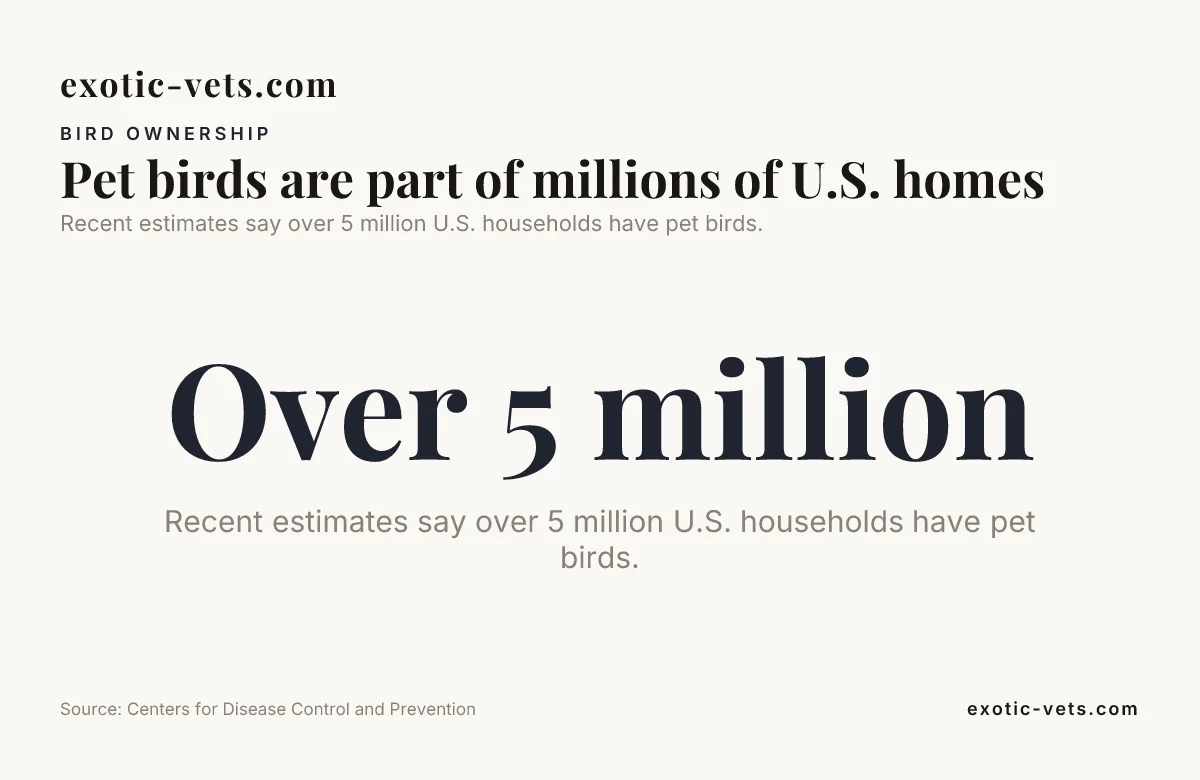
Recent estimates say over 5 million U.S. Households have pet birds.

What happens during the first wellness exam
The veterinarian usually begins by asking about your bird’s age, species, previous illnesses, medications, diet, housing, sleep, activity, and recent changes. These husbandry details often explain a concern faster than a test and help the veterinarian decide what to examine closely.
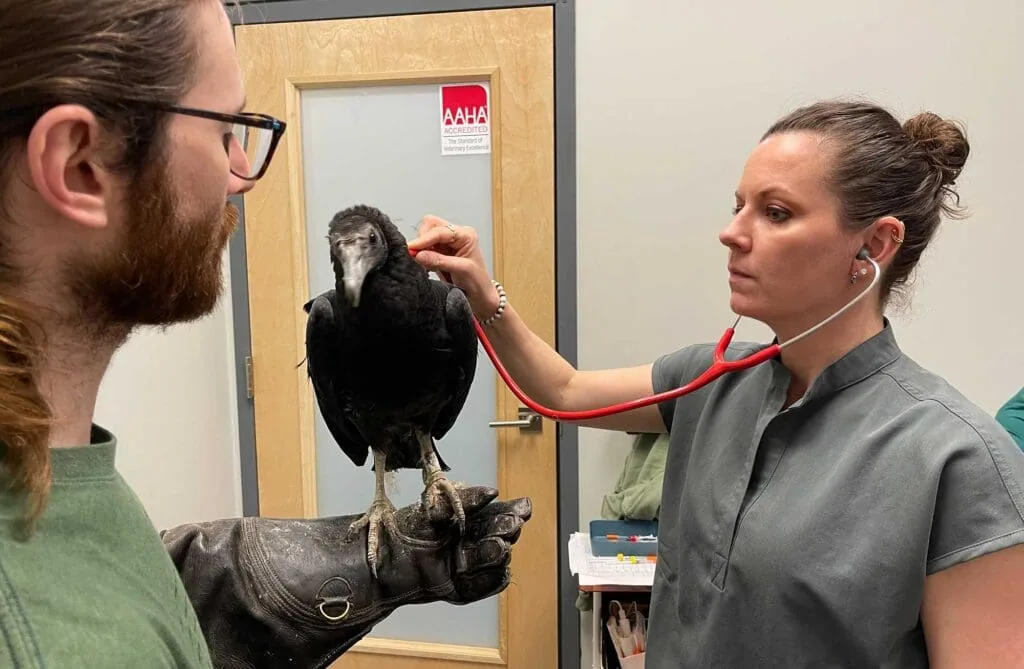
A physical examination may include weight and body condition, breathing, eyes, nostrils, beak, feathers, feet, and the keel, the breastbone that helps assess body condition. The veterinarian chooses handling appropriate to your bird and may keep it brief to limit stress.
Tests are not automatic for every bird. Ask what a proposed test is intended to assess and how the result could affect the care plan.
Many healthy birds have a wellness examination about once every 12 months. Older birds and birds with ongoing health concerns may need visits about every 6 months or on an individualized schedule.
| Bird’s situation | Common examination interval | Why the schedule may differ |
|---|---|---|
| Healthy bird | About every 12 months | Establishes a health baseline and supports preventive care. |
| Older bird or bird with ongoing concerns | About every 6 months, or individually | More frequent review may help monitor a changing health picture. |
Annual preventive care can establish a baseline even when your bird appears well. Parakeets need avian veterinary care too, and regular examinations can give the veterinarian a reference point for future changes.
For example, the Jacksonville clinic profile lists wellness examinations and an in house laboratory among its services, including preventive and husbandry medicine. Our avian care resources offer another starting point for bird owners learning about preventive care.
Discuss diet, housing, and daily care
Describe your bird’s usual foods, portions, treats, supplements, and feeding routine. Bring food packaging or clear photos when useful, since a product name alone may not show the full ingredient list or how much your bird eats.
Explain the enclosure, perches, lighting, sleep schedule, time outside the cage, household hazards, and environmental enrichment. These details help the veterinarian assess the bird’s routine and discuss husbandry changes that fit its species.
Share recent changes in appetite, droppings, vocalizing, movement, or behavior, including when each change began. A short video can help the veterinarian understand a behavior or movement change that does not occur during the appointment.
Ask for nutrition advice that fits your bird’s species and current routine instead of making abrupt changes based on generic guidance. The Pooler clinic profile lists nutritional counseling as a preventive and husbandry medicine service, an example of the type of focused discussion an avian clinic may offer.
Tests and typical visit costs
Depending on the history and examination, a veterinarian may discuss fecal testing, blood work, or diagnostic imaging. Fecal testing can help assess parasites and other intestinal concerns, blood work can assess aspects of organ function and general health, and radiographs can help evaluate internal structures.
Ask what each proposed test is intended to assess and what decision its result may inform. An in house laboratory is one diagnostic service a bird clinic may offer; it can support testing when the veterinarian identifies a reason for it, but it does not mean every bird needs laboratory testing.
| Service | Cost information |
|---|---|
| Wellness examination | Ask the clinic |
| Fecal testing | Ask the clinic |
| Blood work | Ask the clinic |
| Radiographs | Ask the clinic |
Charges vary by region and clinic. They are not a quote or a guarantee of the total visit cost; your bird’s needs and any additional procedures affect the final amount.
Consider access and budgeting options when planning care. A telehealth visit does not replace an in person examination when your bird needs hands on care or diagnostics.
First Bird Vet Visit Checklist
- Bring veterinary records. Include prior test results, medication names and doses, and any relevant history from other clinics.
- Bring current food information. Note foods, portions, treats, supplements, and feeding times, or take photos of packages and labels.
- Write down recent changes. Record when changes in droppings, appetite, activity, vocalizing, or behavior began, and bring useful photos or videos.
- Use a secure, well ventilated carrier. Provide a stable perch or familiar liner, keep the environment calm, and ask the clinic for transport instructions suited to your bird.
- Ask about preparation. Do not fast your bird or change its routine before the appointment unless the clinic specifically instructs you to do so.
- Plan for urgent care. Call a clinic promptly about breathing difficulty, collapse, significant bleeding, or sudden inability to eat. Ask which facility accepts bird emergencies outside regular hours.
Arrange routine preventive care before a problem develops, and make an emergency plan while your bird is stable. Our emergency care listings can help you identify facilities to ask about bird emergencies and after hours arrangements.
Make the first visit useful for your bird
Choose an avian veterinarian based on experience with your bird’s species, the clinic’s available services, and a clear plan for urgent care. Prepare a concise history and ask how each recommended test or follow up step will guide care.
For anyone searching Avian Vet Near Me, the practical next steps are to find a bird experienced veterinarian, bring useful care details, and schedule preventive attention before visible illness appears. This guide does not replace an examination by a veterinarian.
See also: Telehealth And Insurance.
Frequently Asked Questions
Can a bird have a veterinary visit at home?
Yes, some avian veterinarians offer house calls, which can be useful when travel is difficult or the bird becomes highly stressed outside its home. The veterinarian may still recommend a clinic visit if the bird needs equipment, imaging, or treatment that cannot be provided at home.
Can a veterinarian examine my bird without handling it?
A veterinarian can observe posture, movement, breathing, and interaction before deciding whether hands on examination is needed. A bird that accepts a step up or remains calm in a familiar carrier may allow some observations with less restraint, but the veterinarian will explain which parts of the assessment remain possible.
Are vaccines routinely recommended for pet birds?
There is no single vaccine schedule for every companion bird. A veterinarian can discuss whether any vaccination is appropriate based on species, health, housing, and the bird’s contact with other birds.
Should I bring my bird’s cage mate to the appointment?
Ask the clinic before bringing a second bird, since space, appointment goals, and disease control practices can affect the plan. If both birds need care, booking enough time for the veterinarian to assess each one helps keep the visit organized.
Would insurance have paid for this visit?
Our free calculator compares published exotic pet insurance premiums with real exotic vet fees for rabbits, ferrets, guinea pigs, birds, reptiles, and more.
Try the exotic pet insurance cost estimatorDownload the printable PDF: New Bird Wellness Exam & Husbandry Intake Checklist
This guide is general information for pet owners and does not replace an exam by a veterinarian. If your pet is in distress, call a vet now. See our Editorial Policy.