ABVP Avian, Reptile, and Mammal Credentials Explained
Published 2026-10-29 by Viking Trading Group LLC
Find a vet for this
ABVP Avian, Reptile, and Mammal Credentials Explained: these designations identify veterinarians who have earned board certification in a defined species specialty through the American Board of Veterinary Practitioners. This guide explains what the titles mean, how the specialties differ, and how you can verify a veterinarian’s designation; it does not replace an exam.
Key Takeaways
- DABVP means Diplomate of the American Board of Veterinary Practitioners. The specialty in parentheses tells you which ABVP category the veterinarian earned.
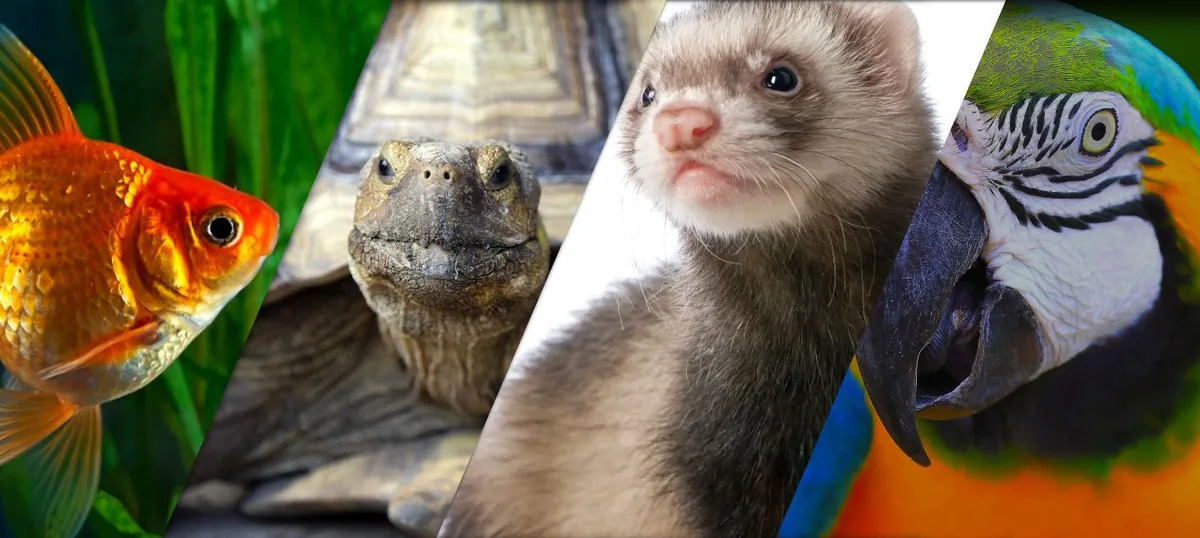
- Avian Practice covers birds, Reptile and Amphibian Practice covers reptiles and amphibians, and Exotic Companion Mammal Practice covers companion mammals such as rabbits, ferrets, and rodents.
- ABVP certification is distinct from association membership, a residency, species-specific experience, or a clinic describing itself as an exotic-animal practice.
- Applicants may use a practice experience route or a residency route. Each has its own application and evidence requirements.
- Use the ABVP Diplomate directory and your state veterinary licensing board to check a clinician’s designation and license. Ask whether the veterinarian currently treats your pet’s species.
- Typical US estimates for an exotic animal consultation are $75 to $145, with diagnostic bloodwork, fecal screening, or imaging estimated at $95 to $340. Fees vary by region, clinic, species, and procedure.
What ABVP and the DABVP title mean
The American Board of Veterinary Practitioners is an AVMA-recognized veterinary specialty organization. A veterinarian who completes its certification process earns Diplomate status, abbreviated DABVP, in a named specialty. ABVP’s specialist application information describes the credentials process and specialty pathways.
Diplomate is the professional title. It is not diplomat, and it does not mean the veterinarian simply belongs to a professional association. Board certification requires the applicant to meet the specialty’s criteria and pass its board examination.
A title should identify the specialty the veterinarian actually holds, such as DABVP in Avian Practice or DABVP in Reptile and Amphibian Practice. One designation does not automatically certify a veterinarian in another species category.
Membership in the Association of Avian Veterinarians (AAV), the Association of Reptile and Amphibian Veterinarians (ARAV), or the Association of Exotic Mammal Veterinarians (AEMV) can show professional engagement. Membership is not the same as board certification, and we label the two separately.
How the three species specialties differ
Each specialty centers on a distinct patient group and the clinical knowledge needed to care for it. There can be overlap in a clinic’s caseload, but a Diplomate’s ABVP designation applies to the specialty printed with the credential.
| Specialty | Species examples | Clinical work examples |
|---|---|---|
| 1. Avian Practice | Parrots, macaws, cockatiels, budgies, and finches | Preventive care, nutrition, diagnostic testing, and treatment of illness or injury in birds |
| 2. Reptile and Amphibian Practice | Snakes, lizards, turtles, tortoises, frogs, and salamanders | Species-specific examination, husbandry assessment, parasite diagnostics, anesthesia, and treatment |
| 3. Exotic Companion Mammal Practice | Rabbits, ferrets, guinea pigs, rats, mice, and chinchillas | Preventive care, dental and medical assessment, anesthesia, surgery, and species-specific treatment |
Some practices care for animals from more than one category. An avian Diplomate may also treat reptiles or rabbits, for example, but that broader caseload does not change the specialty named in the ABVP credential. Ask whether the clinician currently sees your particular species and has experience with its specific needs.
Clinical reference materials such as the Merck Veterinary Manual can help explain animal health topics. They do not determine a clinician’s ABVP status, so use the official Diplomate directory to verify the specialty itself.
Certification routes, experience, and case documentation
Applicants generally pursue certification through a practice experience route or a residency route. The route changes the kind of training and evidence an applicant submits, so do not assume that every candidate follows the same credentials process.
| Route or requirement | What it involves | What to keep in mind |
|---|---|---|
| Practice experience route | Clinical practice evidence, case documentation, and specialty credentials | ABVP says clinical practitioners who demonstrate exceptional patient care and abilities may apply after a minimum of 4 years in practice. ABVP application information |
| Residency route | Specialty-focused supervised training and evidence specified for the applicant’s category | Use the current ABVP instructions for the chosen specialty and route. |
| Case evidence | Records that show the applicant’s role in examining, diagnosing, treating, and following patients | Case logs and case reports should reflect the intended specialty and the applicant’s own clinical reasoning. |
For Avian Practice applicants, ABVP describes at least 4 years of full-time, high-quality practice experience with birds, along with a commitment to high-level continuing education. Applicants should assess whether their actual case mix, practice setting, and clinical responsibilities provide relevant evidence for the specialty they plan to pursue.
Case reports should show more than a list of diagnoses. They give applicants a way to demonstrate how they gathered a history, assessed the patient, selected diagnostics, made treatment decisions, and evaluated progress. Follow the current specialty application instructions for required documentation, because the evidence differs by route and category.
Board examination preparation and reading lists
The board examination tests specialty-level clinical judgment. Prepare with the current ABVP candidate materials, the official specialty reading list, relevant textbooks and journal articles, and practice questions or courses that match the exam outline.
ABVP reports that candidates preparing for the comprehensive examination often spend an average of 1 hour per day studying, reading textbook and journal articles, and taking courses and practice tests. Build a steady study plan around the official materials rather than relying on a single study guide.
University library guides can help locate books and articles, but an older library copy is not a substitute for the current official exam materials. Check the ABVP instructions for the specialty and the year you plan to take the examination, especially when a reading list includes journal articles with a defined date window.
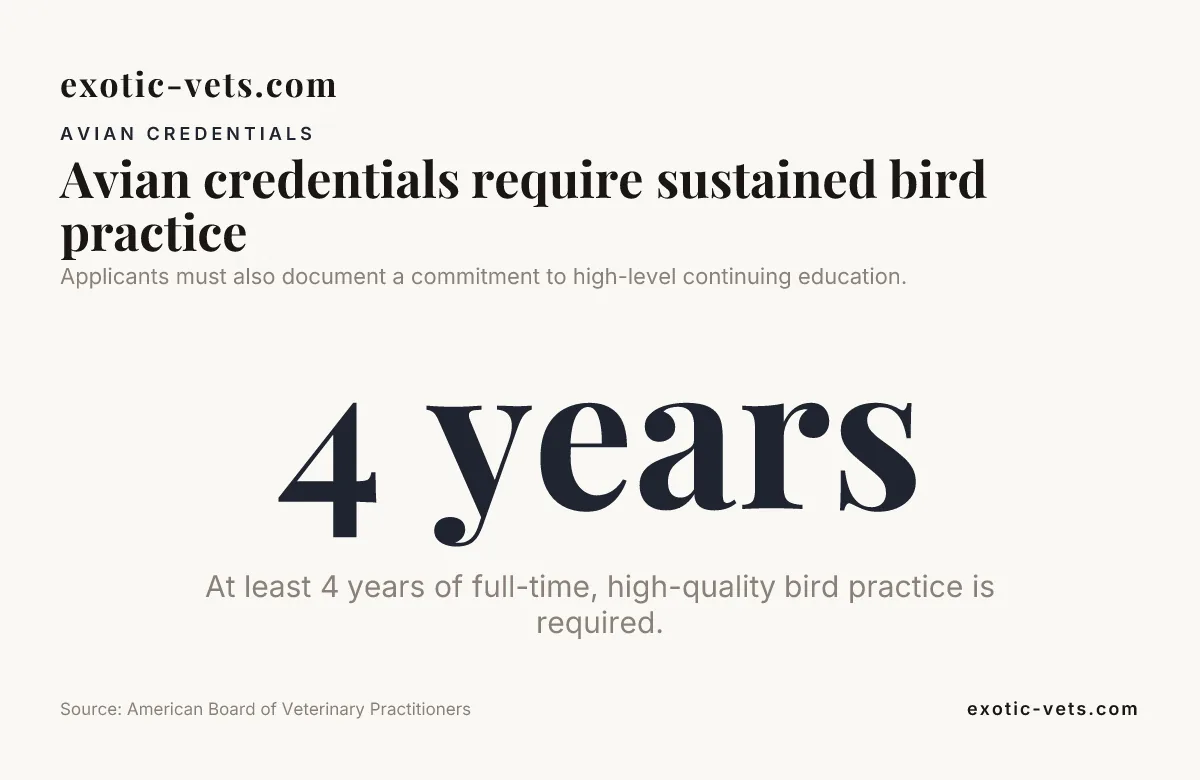
Applicants must also document a commitment to high-level continuing education.
How Diplomates maintain certification
Certification is not the end of professional development. Diplomates must meet ABVP maintenance of certification requirements, including the continuing education and professional development activities set by the board.
Requirements can change, so Diplomates should use current ABVP maintenance instructions to track deadlines, accepted activities, and any renewal steps. Pet owners can use the official ABVP Diplomate directory to check a veterinarian’s listed specialty and current status.
How to verify a veterinarian’s ABVP specialty
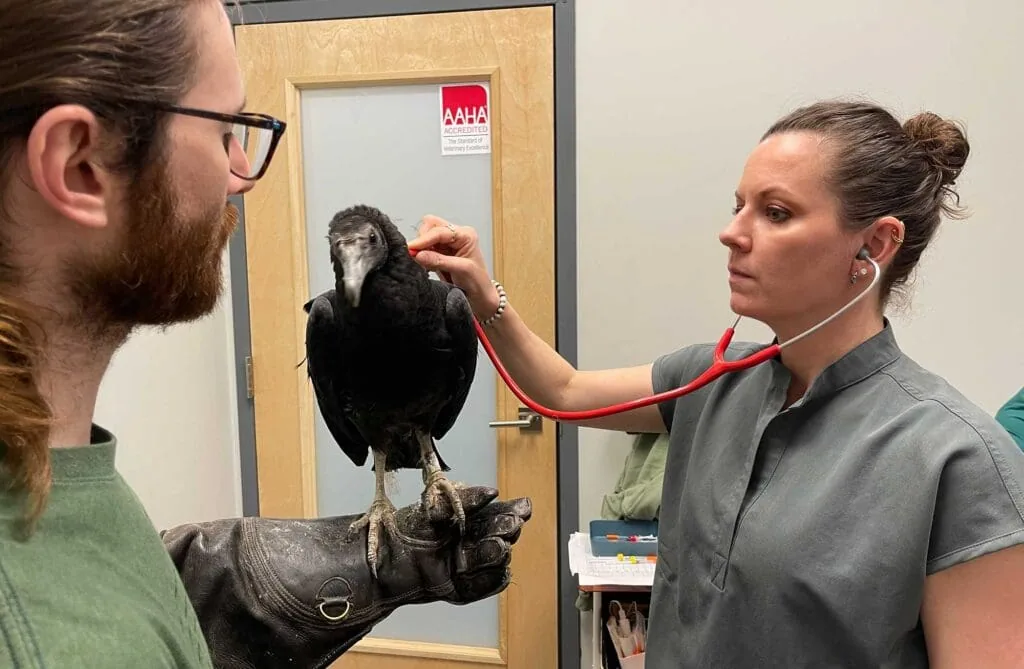
Start with the ABVP Diplomate directory and compare the listed specialty with the title the veterinarian uses. Then check the state veterinary board for an active license and ask the clinic whether the clinician currently treats your pet’s species.
- Match the exact ABVP category to the animal you own.
- Ask about the clinician’s current caseload and experience with your species, including relevant diagnostics, anesthesia, and surgery.
- Ask who will see your pet at the first visit and who handles after-hours or emergency cases.
- Distinguish a board-certified specialist from a veterinarian with species-specific experience or a clinic that offers exotic-animal services.
Our directory at Exotic Vets helps exotic pet owners find specialized veterinary care. Viking Trading Group LLC, based in East Longmeadow, Massachusetts, publishes the directory independently; our listings draw on public business records, clinic websites, state veterinary board lookups, association directories, and map listings. If we cannot confirm a credential, we leave it off the listing rather than guess.
Use the directory to identify clinics for follow-up, not as the authority that grants certification. For example, our Indianapolis clinic profile identifies a practice with board-certified Avian and Exotic Companion Mammal specialists. You can also browse the board-certified exotic veterinary listings and ask each practice about the particular clinician you hope to see.
Typical US veterinary costs and what they cover
ABVP certification does not set a clinic’s appointment fees. The following typical US estimates are informational, not quotes from a specific practice, and costs vary by region, clinic, species, and the tests or treatment needed.
| Visit or service | Typical US estimate | What affects the final fee |
|---|---|---|
| Avian board-certified veterinary consultation | $75 to $145 | Clinic location, appointment type, and the patient’s needs |
| Diagnostic bloodwork, fecal screening, or imaging | $95 to $340 | Which tests are performed and the equipment or laboratory work involved |
These estimates appear in our board-certified exotic veterinary directory. Request an itemized estimate from the clinic for your pet’s planned appointment; urgent diagnostics or treatment can change the total.
Checklist for choosing an ABVP Diplomate
- Find the veterinarian’s exact specialty in the ABVP Diplomate directory.
- Check the professional license through the state veterinary board.
- Ask whether the veterinarian currently treats your species and the condition that concerns you.
- Ask how the clinic handles referrals, after-hours calls, and emergencies.
- For reptile care, use our reptile veterinarian directory to identify practices to contact.
- If your pet needs urgent attention, look for an emergency exotic animal hospital that accepts your species.
- Use telehealth and insurance information as planning support, not a substitute for hands-on care. Our telehealth and insurance guide explains those options.
Difficulty breathing, severe weakness, or sudden serious changes need prompt veterinary attention. Husbandry details often explain a problem faster than any test, so bring information about diet, housing, lighting, temperature, and recent changes to the appointment.
Summary
ABVP Avian, Reptile, and Mammal Credentials Explained comes down to three things: the DABVP title identifies board certification, the specialty name defines its species scope, and the official ABVP directory helps verify the designation. Compare the credential with your pet’s needs, ask whether the clinician currently treats that species, and remember that none of these guides replace an exam.
Frequently Asked Questions
Can an ABVP Diplomate treat a species outside their specialty?
A veterinarian’s license and clinical skills may support care beyond the species named in an ABVP specialty. Ask the clinic about the clinician’s current experience with your animal and the specific service your pet needs.
Does ABVP certification guarantee a particular treatment outcome?
No credential can guarantee an outcome for an individual patient. A Diplomate designation documents specialty certification, while prognosis depends on the animal’s condition, available diagnostics, and response to treatment.
Can an ABVP Diplomate be my pet’s regular veterinarian?
Yes, if the clinician and practice accept your species and provide the ongoing preventive and medical care your pet needs. Ask how routine care and referrals are coordinated if another specialist becomes involved.
Should I choose an ABVP specialist or the nearest emergency clinic?
For a time-sensitive emergency, prioritize prompt access to a clinic that can stabilize and treat your species. You can ask whether the emergency team consults with or refers to an ABVP Diplomate for follow-up care.
Does a veterinarian need separate ABVP certification for every species they treat?
Each ABVP designation applies to its named specialty, and certification in one category does not establish certification in another. A veterinarian may still have clinical experience with additional species, so ask about both credentials and hands-on care.
Would insurance have paid for this visit?
Our free calculator compares published exotic pet insurance premiums with real exotic vet fees for rabbits, ferrets, guinea pigs, birds, reptiles, and more.
Try the exotic pet insurance cost estimatorDownload the printable PDF: DVM vs ABVP Diplomate Credential Reference Guide
This guide is general information for pet owners and does not replace an exam by a veterinarian. If your pet is in distress, call a vet now. See our Editorial Policy.